Showing posts with label Library of America. Show all posts

Celebrate Women's Month: Read Shirley Jackson

More reasons to celebrate.  Finally -- and wow, this is overdue--Library of America has created an edition of Shirley Jackson's great novels and short stories.  I say, finally, because Jackson has had to wait in line after, say, Dashiell Hammett.  Huh.

Don't get me wrong.  Nothing wrong with giving Hammett his due.  I like (sort of) Hammett (well actually, I don't, but he can be part of the canon.)

But seriously?  If the mission of LOA is to honor America's great writers, where was Shirley Jackson?  She's a writer who gets into your bones and your head.  She is just a great writer.

Hers is the voice of everyday, familiar fears, the woman who crawls inside families, sisters, crazy houses made crazy by the people in them.  Jackson is the voice of everyday hatred turned into evil.  The world that is always about to turn dark, and unpredictable, the world teetering on itself.  There are just so many fine short stories and two truly unforgettable novels -- "We Have Always Lived in the Castle" and "The Haunting of Hill House."

So celebrate and read.  It's a good time to be scared.  
    

Celebrate Women's Day: Carson McCullers

So thrilled that Library of America (whose efforts deserve our support) has done the right thing and published the collected writings of several women authors-- overdue, perhaps, but welcome nevertheless.

So, in the spirit of celebrating women, consider reading Caron McCullers.  No question that McCuller remains an original, and among the Southern writers, the one who gets me everytime.

Maybe it was her early, failure in music, but there's a certain "something" -- what a critic has called a "universe of yearning" that is unmistakeably hers.  Her characters seem to come from the paintings of Edward Hopper:  McCuller is their champion.  She is the writer of loneliness, silences and the unrealized.  A writer who faces flaws, even cruelty, in people, and doesn't turn away, and never leaves the reader behind. And, at a time when most white writers didn't seem to know what to do (or what to say) about "Negro" characters, McCullers plunged right in.

You can start by reading (courtesy of LOA) one of her first short stories-- about a prodigy who realizes that she isn't destined for greatness in music  The irony (for the reader) is know that Carson McCullers would become, well, Carson McCullers.


https://www.loa.org/news-and-views/1219-carson-mccullers-wunderkind

And while you're at it, consider the wonderful boxed set.  I'll be buying it for myself, as a treat, as my personal celebration of Women's Day.


Holiday Reading List: Fiction about New York

This year, I am in a New York frame of mind for my holiday reading.  Although it has been almost two decades since I lived there, New York will always feel like home to me.  It's my city.

So what could be better than reading fiction where the city's the star player?  As it happens, this year, though a Facebook group, I discovered three fine novels written by women, each taking place in a different neighborhood in Manhattan, as well as an equally wonderful story collection.  To that I add, a volume from Library of America, by one of my favorite New York writers-- actually by one of my favorite writers.
So, download or buy, and relax.  These writers will give you a perfect Holiday New York Read.


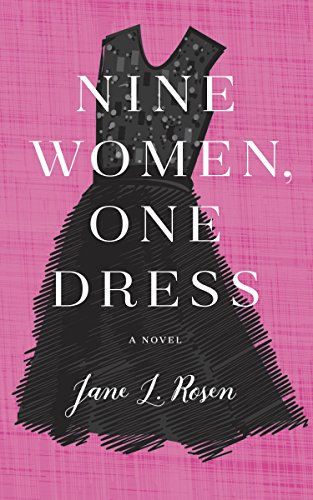
Nine Women, One Dress by Jane Rosen

Few books truly earn the word charming-- and this is one of them. The author skillfully weaves nine women's tales (among them, a buyer at Bloomingdale's, and a would-be actress, to name two of my favorites) and connects them through, yes, the perfect little black dress, designed by an almost 90-year old immigrant designer.  Rosen deftly returns us to the origins of the garment industry (from Poland to Manhattan's West 30's) while not missing a beat. Sometimes, contemporary romance can be sticky-sweet, but who can resist a happy ending, especially when there are NINE of them?


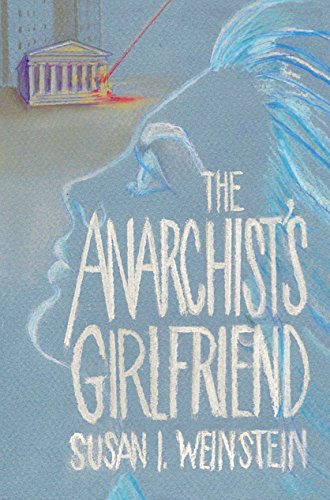
The Anarchist's Girlfriend by Susan Weinstein

A treat to discover this almost-lost novel, now re-launched in a newly edited version.  (I've spoken with the author about the book's publishing history with the author, Susan Weinstein, here.)

Fashion's part of this New York story, too, in the form of a futuristic fashion muse (this heroine designs clothes of the future)  in The Anarchist's Girlfriend.  It is the New York of the '80s, in downtown Manhattan, with its blend offbeat politics, offbeat sensibilities, and the bizarre conspiracies.  Think: terrorist plots, wacky spiritualist plots, and of course, anarchist plots, all completely circular and self-enclosed-- and in Weinstein's hands, all colliding.  For lovers of Thomas Pynchon (that would be me) and Don deLillo, this novel is a densely-plotted, twisty joyride, faster than a New York subway, and laugh-out-loud funny.
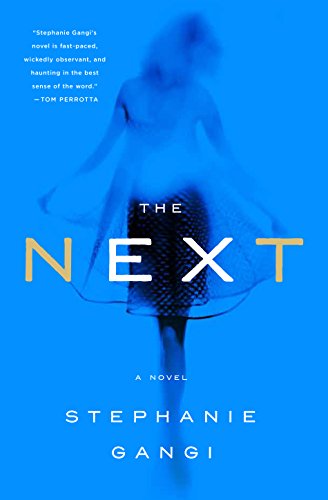


The Next by Stephanie Gangi

From downtown Manhattan, zoom up to the Upper East Side, through the eyes of a jealous, outrageously sexy ghost named Joanna, and those she left behind (including her loyal dog.)  Don't worry about the ghostly part, because Joanna knows her shoe brands, movies, songs and swanky restaurants, as only a chic New Yorker can-- and she's determined to get revenge on the younger guy who dumped her for a celebrity skincare guru.  With biting feminist comedy, the smart Joanna, even in death, is more powerful than her shady Lothario-- and this spiritual page turner really delivers.


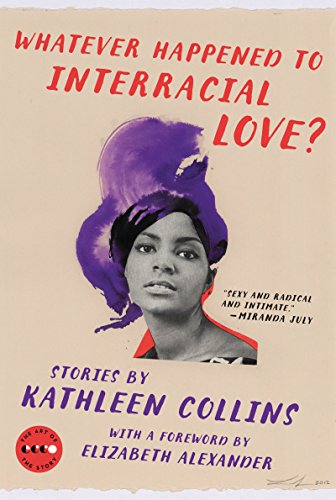
Whatever Happened to Interracial Love by Kathleen Collins

Sometimes, when critics rave, I am skeptical, but this time, the accolades are well-deserved.  Kathleen Collins, who died at the age of 46, is that rare breed, a natural storyteller.  Every sentence in this collection made me want to read more: from the uncle who cried himself to sleep, to the "happy" family based on pretense, every moment is alive.  Aside from Grace Paley, it's hard for me to think of another short story writer who's captured the sense, the vibrancy, of New York life so accurately. Entire lives are captured in brief fragments- and each of them seems to contain mysteries only fiction can glimpse.  If you want to remember New York in the sixties and seventies, this is the book to read.    


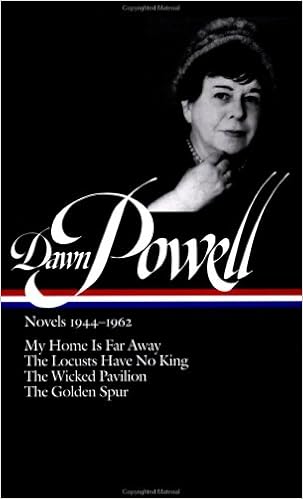
Library of America:  Dawn Powell:  Novels 1944-1962 (Volume 2)

I am nuts about the work of novelist, Dawn Powell.  I plain old adore her.  Soulful, funny, and a razor-sharp wit-- and a true picture of New York in the 40s and 50s.

No one writes better about the pretensions and, yes, dreams of Manhattan.  Her plots are tight, her characters quintessential New Yorkers (from the hapless advertising executive who's fooling around more than is good for him to the young, on-the-make writers hustling their way up), her dialogue pitch perfect.  Here are the New York bars, with their array of drunken, self-indulgent would-be artists; the pseudo-swanky soirees with their array of has-beens, tired hostesses, and bored spouses, and the shifting and shifty landscape of success and failure.  Artists come and artists go in Powell's world, and one year's toast is next year's trash-- and it's never less than funny.

I own both volumes in the LOA collection.  But if you read only one, this second contains three of her Manhattan novels, including her hilarious masterpiece, The Golden Spur.


My year of reading Noir

According to my Goodreads profile, I read over 60 books this year -- not counting the ones that I abandoned.  As usual, few on my list were new- but I'll get around to those next decade. It was a great year for catching up on the noir classics.  

Among the treasures, I'd count:

The Library of America's Women Crime Writers.  What a revelation this two-volume set was.  First, the magical Laura by Vera Kaspary.  Preminger's film of the same name is a personal favorite, and I dreaded to think that the book would suffer by comparison.  It didn't.    

Another highlight of the collection: Dorothy Hughes's In a Lonely Place.  That's a movie that I also like (by Nicolas Ray, with Bogart and the fabulous Gloria Grahame.) But how much better, darker, and more suspenseful was the novel.  One of those I have to stay up late and finish this books.

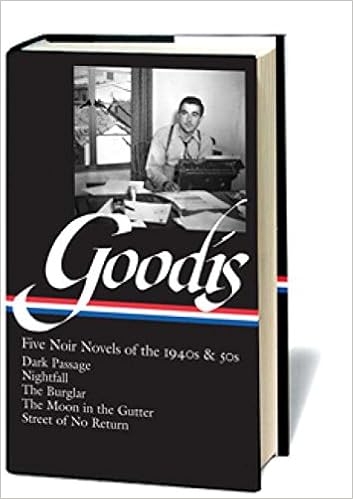
Again, the Library of America and more noir in the form of David Goodis.  I was writing a Philadelphia novel, so Goodis had special appeal since he wrote about Philly. He's a poetic writer whose voice sometimes sinks into pathos, but when he's on target, the books soar.  My favorite: The Moon in the Gutter, a delusional excursion through Philly's poorest neighborhoods, where a man's sister has been murdered.  No spoilers.

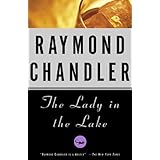
Product DetailsConfession:  I'd never read the novels of Raymond Chandler. In 2015, read all of them, and then read them again.  He's the master of atmosphere -- and in The Lady in the Lake, the scents of every setting are haunting.  Pine needles, old carpet, salty air, it's all there.


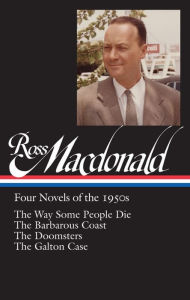
Ross Macdonald: Four Novels of the 1950s: (Library of America #264)

My ever-thoughtful sister sent me a gift of Library of America's Ross Macdonald's Four Novels of the 1950's.  Along with Chandler, Macdonald's another author I'd ignored-- and while Chandler's the master of mood, Macdonald is the master of plot.  His complex, tangled but tight, mysteries must be the best-plotted books ever.  Like everyone, I am in awe of The Galton Case, a novel about guilt that spans generations, and the ever-present prison of family gone awry. 


Another film classic, The Big Clock, led to me to Kenneth Fearing's novel of the same name.  Now, Ray Milland is my idea of the perfect ambiguous hero, and it was such fun to encounter that same moral ambiguity, and witty sophistication in Fearing's novel.  Fearing was a poet, and his facility with imagery really pays off here.  


Women Crime Writers: Recognition, finally?

For those of us who dote on film noir, it is no secret that many of the more riveting tales of suspense were penned by women. Take one of my all-time favorite movies, Laura, based on the novel by Vera Caspary.  But oddly, with the exception of Patricia Highsmith (who wrote The Talented Mr. Ripley as well as the weird Strangers on a Train,) these writers have been wiped off the literary map.  Margaret Millar was married to Ross Macdonald-- and while Macdonald's reputation had remained steady or even ascended, she has been ignored or forgotten.


So kudos to the Library of America for releasing a long-overdue volume of women crime writers.   And my thanks to the always alert critic, Terry Teachout, for his insightful review of these writers.  Rather than summarize his points, I'll direct you to his article.


The Queens of Crime - WSJ
Related Posts Plugin for WordPress, Blogger...