Showing posts with label Susan Weinstein. Show all posts

Author Susan Weinstein talks about Paradise Gardens

Today, we have a guest post from novelist, Susan Weinstein, whose dystopian novel, PARADISE GARDENS, will be published in a new edition from Pelekinesis Publishing Group. This new edition contains wonderful illustrations by the author. You can read my review of on Goodreads, here. This novel is one of several new editions of Weinstein's work-- I interviewed her about THE ANARCHIST'S GIRLFRIEND on this blog (read the interview here.)

I'll let Susan take it from here.
-----
Déjà vu our strange times.  In Nixon's 1969 America, a stranger leaped out of a car, took photos of me and my high school boyfriend and sped away. Afterward, I was called into the principal's office, and accused of being  a "ringleader" of a drug  ring.  My choice: give names or be expelled.  I gave facts.  My high school was conservative, mostly working class. Beer was the drug of choice and students  enlisted for Vietnam. Ten went to college.  One was me.  Fact: The drug ring never existed.

1969-70, I became an antiwar activist.  1980s, I began PARADISE GARDENS while working for a Wall Street publication for investors.  In that time, Reagan's religious right extolled corporate interests for the "elect.” Their destiny was to be rich.   In Manhattan, where I lived, this meant sky-high rents and asking prices. Rent-controlled apartments were preventing this preordained "destiny."  

SHE lowered her blinds, but it was too late. He had seen her.
2017 is again a time of deception and alarm.  Paranoia is a rational response to an insane society (to paraphrase Freud). In paranoid fiction, such as Philip Dick's 1968 "Do Androids Dream of Electronic Sheep," logic is non-linear.  Facades fall apart, and  truth is revealed in the chaos. 
  
PARADISE GARDENS begins in 2250, after government has dissolved amid environmental breakdown.  A real estate project underground  is sold  to the surviving corporate elite. Rather than Big Brother, a database runs this world and controls human destiny for the benefit of corporate planning-- even producing employees.  

Like most paranoid fiction, there’s a kind of clairvoyance in retrospect. Some elements that I wrote about, before there was an Internet, like  "Information Pirates" have already happened. But there is light and hope in PARADISE GARDENS.  I believe cautionary tales like this can bring us through our worst fears to a better  place.  We can sleep and imagine a more utopian future.
-----
Find out more about PARADISE GARDENS below.

Susan Weinstein's BLOG
On Facebook: https://www.facebook.com/paradise.gardens.new.edition/

Pre-order the book HERE 

Holiday Reading List: Fiction about New York

This year, I am in a New York frame of mind for my holiday reading.  Although it has been almost two decades since I lived there, New York will always feel like home to me.  It's my city.

So what could be better than reading fiction where the city's the star player?  As it happens, this year, though a Facebook group, I discovered three fine novels written by women, each taking place in a different neighborhood in Manhattan, as well as an equally wonderful story collection.  To that I add, a volume from Library of America, by one of my favorite New York writers-- actually by one of my favorite writers.
So, download or buy, and relax.  These writers will give you a perfect Holiday New York Read.


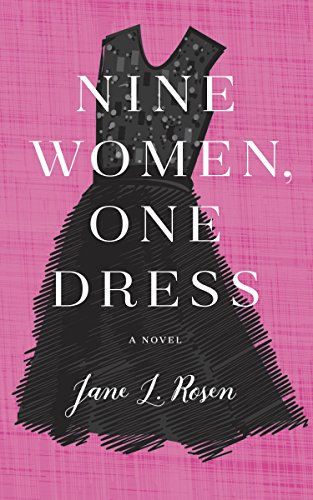
Nine Women, One Dress by Jane Rosen

Few books truly earn the word charming-- and this is one of them. The author skillfully weaves nine women's tales (among them, a buyer at Bloomingdale's, and a would-be actress, to name two of my favorites) and connects them through, yes, the perfect little black dress, designed by an almost 90-year old immigrant designer.  Rosen deftly returns us to the origins of the garment industry (from Poland to Manhattan's West 30's) while not missing a beat. Sometimes, contemporary romance can be sticky-sweet, but who can resist a happy ending, especially when there are NINE of them?


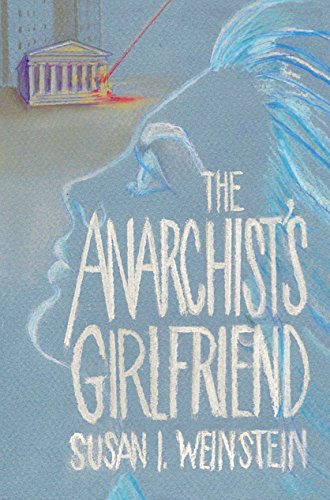
The Anarchist's Girlfriend by Susan Weinstein

A treat to discover this almost-lost novel, now re-launched in a newly edited version.  (I've spoken with the author about the book's publishing history with the author, Susan Weinstein, here.)

Fashion's part of this New York story, too, in the form of a futuristic fashion muse (this heroine designs clothes of the future)  in The Anarchist's Girlfriend.  It is the New York of the '80s, in downtown Manhattan, with its blend offbeat politics, offbeat sensibilities, and the bizarre conspiracies.  Think: terrorist plots, wacky spiritualist plots, and of course, anarchist plots, all completely circular and self-enclosed-- and in Weinstein's hands, all colliding.  For lovers of Thomas Pynchon (that would be me) and Don deLillo, this novel is a densely-plotted, twisty joyride, faster than a New York subway, and laugh-out-loud funny.



The Next by Stephanie Gangi

From downtown Manhattan, zoom up to the Upper East Side, through the eyes of a jealous, outrageously sexy ghost named Joanna, and those she left behind (including her loyal dog.)  Don't worry about the ghostly part, because Joanna knows her shoe brands, movies, songs and swanky restaurants, as only a chic New Yorker can-- and she's determined to get revenge on the younger guy who dumped her for a celebrity skincare guru.  With biting feminist comedy, the smart Joanna, even in death, is more powerful than her shady Lothario-- and this spiritual page turner really delivers.


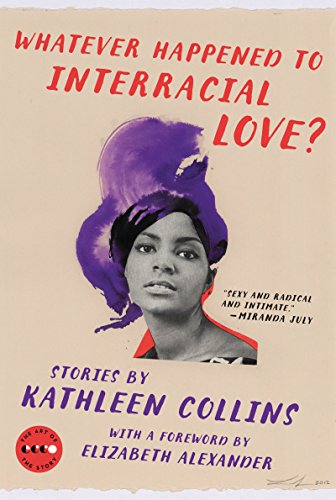
Whatever Happened to Interracial Love by Kathleen Collins

Sometimes, when critics rave, I am skeptical, but this time, the accolades are well-deserved.  Kathleen Collins, who died at the age of 46, is that rare breed, a natural storyteller.  Every sentence in this collection made me want to read more: from the uncle who cried himself to sleep, to the "happy" family based on pretense, every moment is alive.  Aside from Grace Paley, it's hard for me to think of another short story writer who's captured the sense, the vibrancy, of New York life so accurately. Entire lives are captured in brief fragments- and each of them seems to contain mysteries only fiction can glimpse.  If you want to remember New York in the sixties and seventies, this is the book to read.    


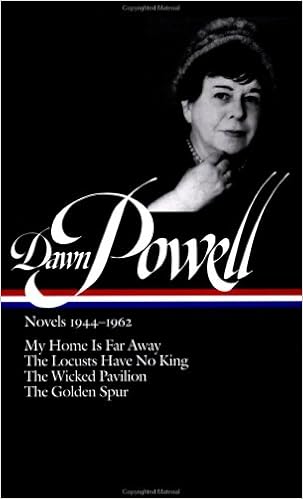
Library of America:  Dawn Powell:  Novels 1944-1962 (Volume 2)

I am nuts about the work of novelist, Dawn Powell.  I plain old adore her.  Soulful, funny, and a razor-sharp wit-- and a true picture of New York in the 40s and 50s.

No one writes better about the pretensions and, yes, dreams of Manhattan.  Her plots are tight, her characters quintessential New Yorkers (from the hapless advertising executive who's fooling around more than is good for him to the young, on-the-make writers hustling their way up), her dialogue pitch perfect.  Here are the New York bars, with their array of drunken, self-indulgent would-be artists; the pseudo-swanky soirees with their array of has-beens, tired hostesses, and bored spouses, and the shifting and shifty landscape of success and failure.  Artists come and artists go in Powell's world, and one year's toast is next year's trash-- and it's never less than funny.

I own both volumes in the LOA collection.  But if you read only one, this second contains three of her Manhattan novels, including her hilarious masterpiece, The Golden Spur.


Interview with Susan Weinstein, author, THE ANARCHIST'S GIRLFRIEND

Today’s author interview is with Susan Weinstein, whose underground classic, THE ANARCHIST’S GIRLFRIEND is being released in a definitive new edition from Pelekinesis. The wacky novel combines themes of terrorism, metaphysics and conspiracies and I gobbled it up.  

Here is some background on Susan:

Susan I. Weinstein is a writer, playwright, and painter—and a graduate of Temple University's Tyler School of Art. She is married and lives in NYC.  Susan has made her living publicizing books on arts, social and political issues, among other topics, for mainstream, small and university presses. Her review blog is

SARETT:  I love writers who use comedy to address darker issues of identity and meaning -- and you do this remarkably well in The Anarchist’s Girlfriend.  What’s the biggest challenge in keeping it funny?
Weinstein: Keeping a perspective and not getting lost in the dark.  I think humor is perspective.  There’s a Moliere quote that’s stuck in my mind. It’s something like, if you look at life with your heart it’s a tragedy. If you look at it with your mind, it’s a comedy.  

SARETT: Are there any writing rules that you secretly enjoy breaking?
Weinstein: Believability and likeability. I don’t think there’s a good writer who has those in mind or is sure what they mean, when they get down to work. Write what you know is another shibboleth.  A person may understand what it’s like to live on Mars, without knowing how they know that.  I think Ursula LeGuin has debunked quite a few rules.  

SARETT: You’ve mentioned that Dostoyevsky's The Idiot prompted your invention of the other-worldly Anarchist’s Girlfriend.  As I read, many of these characters seemed like people I’d met in downtown Manhattan.  What was the mix of real vs. invented?
Weinstein:  I lived in a Bowery loft down the street from Nan Goldin.  One of her roommates, Jan, drew incredible comic strips and made clothes of the future. An Irish Anarchist silkscreened peace posters in a basement down the street.  Mr. Dio was real, as was the Arizona Dust. I met him on a temp job. (He called me into his office to confess his fears that the dust used to store missiles would misfire.)   The Llama is a composite with a good deal of Werner Erhard. Wes Mavine is based on an artist/businessman, whom I threw a broom at, after he fired me.   

As for Sandy: I worked as a switchboard operator. My clients did include a church suicide prevention center, a prostitution ring, a dog grooming place. I once was crossing the street when a van stopped and the driver fell out in an epileptic fit. I directed traffic, as did the Anarchist's Girlfriend.   

SARETT:  You poke holes though pseudo-spiritualism, yet there's no doubt that the Anarchist's Girlfriend has psychic ability.  Do you believe in such powers or is this a literary conceit?   
Weinstein: Both.  I believe some people have abilities we call psychic.  I think they are often stronger in childhood and diminish. I think these abilities are based on science we don’t understand. The Maimonides Dream Institute in the late 1960’s proved the existence of dream telepathy—these experiments were published by Penguin. I read it because I experienced this as an adolescent. I dreamed a series of pop songs, before they came out!

SARETT:  The wacky humor, and inventive plotting of the novel reminded me of Thomas Pynchon. Were you a fan of his?  Other stylistic muses?  
Weinstein: I read some Pynchon but I read all of John Dos Passos's USA Trilogy.  The character, The Anarchist's Girlfriend, is a kind of blond descendent of Nana and Sister Carrie, though her soul's akin to Dostoyevsky's The Idiot.  I like Bret Harte's Western humor in relating tragic events. Then there is science fiction: Philip K. Dick's Time Out of Joint and Theodore Sturgeon's IT.

SARETT: The novel is set in the New York of the early eighties, and yet it seems remarkably pertinent to our current obsessions with terrorism.  If you were setting today, what changes (aside from sky high rents), would you envision for the story?
Weinstein: The New York of 2016 is far less idiosyncratic, more collective, hive-like than before.  Today, every terrorist act seems calculated-- most are players with a larger cultural agenda.  Now I might show how cell phones and social media affect thinking.  For instance, a desperate personal act like the Anarchist’s, would not be attempted in his insular way with no intention of hurting anyone.  Similarly, Sandy’s operation would be a different grandiose project.  She might be a career oriented performance artist—and the outcome of her operation would be subverted by her "contacts."  The Anarchist's Girlfriend might be a fashion muse, the Anarchist, a designer of brand logos, Wayne a news blogger.  

SARETT:  Your characters have such detailed, rich lives—it must have been difficult to let them go.  Do you ever wonder about their fates?  Did you contemplate a sequel?
Weinstein:  I am attached to these characters.  But they occupy a specific time and place.  The Anarchist's Girlfriend's passage is from innocence to maturity. And all the characters experience a crucial passage.  The ending shows the shape of some futures--Wayne's, the AG, The Anarchist, The Llama and Sandy. I can imagine them waking up in our time in the altered roles I described but no sequel.

SARETT:  This novel has an interesting publishing history--colorful in itself.  Tell us a little about its evolution.  Is the new version revised?  
Weinstein: I read and performed chapters of this novel in art bars/clubs and at marathon benefits for zines. It evolved slowly over several years.  The introduction appeared in the 1984 debut issue of "The Portable Lower East Side," now in NYU’s collection.  The evolving MS attracted the notice of several notable editors, but was never picked up.  Years later, I gave an editor my ONLY copy (by then on unplayable diskettes.)  She loved it, but not for her press. Worse yet, she had trashed it (assuming no one was idiotic enough to send an original.) I got the box before the trash was picked up!   2000's, Eat Your Serial Press published it, but it was not a "professional" launch.   

Now, finally, the book is getting a proper release with a small, literary press.  The Pelekinesis book is a new edition—edited, with a new preface and visuals.     

SARETT:  I’m always seeking new (or forgotten) writers.  Any books that you’d like recommend to our blog readers?  
Weinstein:
Lawrence Ferlinghetti, Writing Across the Landscape
Konundrum: Selected Prose of Franz Kafka selected and translated by Peter Wortsman
Edith Nesbit:  her books inspired Lewis' Narnia series and The Wizard of Oz books.  Her fantasy is wise about innocence. The Story of The Story of the Amulet, 5 Children and IT, The Magic City

SARETT:  What’s up next?  Any projects in the works?
Weinstein: I am finishing new material for the 2017 New Editions: Paradise Gardens, which takes place in 2050 on the Earth's surface and 3011 underground; and Tales of The Mer Family Onyx:  Mermaid Stories on Land and Under the Sea.   I have a new novel based on blacked-out v-mail-- plus a play to finish and marketing of another, "The Wapshot Whatever."

Learn more about Susan:
Twitter @swpubrel

There is an event on December 8th.  Learn about it here:   https://www.facebook.com/events/1222209531134926/

ORDER from Pelekenesis here 
ALSO available at Barnes and Noble  and Amazon 
Related Posts Plugin for WordPress, Blogger...