Showing posts with label memoir. Show all posts

Run Sally Run, an essay by Carla Sarett


 Sadly, during the pandemic, several wonderful magazines have vanished.  Among them, The Olive Press, which printed the essay below and nominated it for a Pushcart Prize.  

It's among my favorite of my essays, so I am reprinting it here. 


Run Sally Run

No one called me precocious as a kid. 

At five or six, I was content to amuse myself with making leaf chains, singing, and doodling, and if I could manage it, watching television. My mother was convinced (how, I don’t know) that watching TV made kids blind, so I snuck on tip-toes down to the basement, for my morning fix while my parents slept. My ritual was to arrange cereal boxes in a row so I could synchronize eating with advertising jingles: a spoonful of cereal with its matching ad. That’s as much as I recall of my reading instruction: in a matter of days or weeks or months, I could read.

Maybe that’s why I didn’t bother to explain about the reading aptitude test, which my school had administered in the first grade. The test was based on Dick, Jane and Sally and their dog. First, a row of three pictures, such as a plate, Sally carrying a plate, the plate breaking, and then gave three choices: Sally happy, neutral, or frowning. I got bored: why was Sally supposed to get happy about cakes, and sad about plates? Surely, Sally had bigger problems in her life. I quickly checked off neutral for most of the test questions, and laid down my pencil before anyone else did.

Unsurprisingly, I ended up in the slow, or slower, reading aptitude group. We copied letters of the alphabet while the clever “readers” were given real books about Dick, Jane and Sally. The “readers” sat on one side of the classroom, the rest of us on the other. I didn’t care, since I brought in my own entertainment; by that point, I was engrossed in The Adventures of Tom Sawyer.

For the record, I worshipped my first-grade teacher, whom I thought kind and pretty, and I was not frightened of her. It simply hadn’t occurred to me to tell her I read, since the test had dumped me in the slow group—and tests must say something about me. Something bad, I felt. Maybe even very bad.

I apologized when she caught me with a book instead of copying the letters, M, N, O. “I’m sorry, I was reading,” I said, and held up the book as my defense.

She seemed flabbergasted. “You can read this? Without help? How did you learn?”

I admitted that yes, I could read, all by myself, without help.

That afternoon, I was marched to the guidance counsellor’s office. I was seated while three tall grown-ups –the guidance counselor who was a grey-haired woman, the elementary school principal (in my memory, tall and bald), and my first-grade teacher—stood and stared. I had never been alone with so many adults who were not related to me. They handed me a children’s book to read for them, which I read aloud, as fast and as loud as I could.

Afterward, there was an awkward silence. “But the test,” the guidance counselor softly began, and she held up a copy of the booklet, The Reading Aptitude Test.

I shrugged. There was nothing to say. Besides, I didn’t like talking about myself.

Decades later, I understand how much money, decision-making, social anxiety had guided the school’s selection of that “instrument.” It was a middle-class public school that prided itself on innovation. Probably teachers and administrators had endlessly debated which test was superior, which was “cost-effective,” which test helped sift the “gifted” from the merely “average” or the “slow” children. But that day, all I felt was frightened.

The guidance counselor re-tested me as the other two observed, with grim fascination. Question by question, she asked about my choices. Was that what I really meant to check? Hadn’t I seen the frowning Sally after the broken plate?

I tried to explain that Sally ought to know that a broken plate is not a broken leg, and if no one got hurt, that’s all that counts. Maybe Sally didn’t like that plate, maybe she smashed it deliberately just for fun! But their stunned faces told me that my answer was wrong, a broken plate was a big deal—and other kids knew the broken plate was a big deal. The why of it didn’t matter.

In a snap, I “got” what tests were: a series of “trick” questions you had to answer the way other people thought. Well, even in first grade, I knew I could master that. Next time, I’d know which box to check. I wouldn’t give it a second thought. Broken plate, Sally frowns. Cookies, Sally smiles. Next?

Today, we take multiple choice exams for granted. But such tests were rare until the 1930’s; and gained widespread acceptance in schools with the advent of electronic data processing. Tests that could be electronically graded were both cheaper to administer, and faster as well. By 1936, IBM had developed the first automatic test scanner; by 1958, computerized scoring was available nation-wide. Elementary schools quickly adopted them, starting with IQ, then a host of other aptitude tests. Testing mania in America had begun, and it has only accelerated. Oddly, IQ scores keep rising – sometimes dramatically, while people (I think we can agree) are no smarter than they were a century or two ago. And while SATs demand that students discriminate between torpid and turgid, in “real life,” such words go unused.

Personally, that afternoon was a success. I advanced to the second-grade reading class, which was reading The Velveteen Rabbit. Needless to say, a big step down from Mark Twain. After that day, I began scoring “high” on aptitude tests; from there, I sailed, without too much complaint, through school, college, graduate school.

I wonder, though, how I might have fared if my first-grade teacher hadn’t noticed my reading the book, if I had not been re-tested. How long would I have taken to discover my “error.” I was intensely shy, afraid of other kids—I never would have asked anyone on my own. Besides, deep down, I felt I was in the right, that a broken plate can mean many things, and it’s rarely something to cry about. And every time I hear another lament about children’s failing test scores, I think of that lonely hour when I began to pretend that the world can be contained in simple choices, and there is only one answer.

Run, Sally, run, I think, before you believe it.


No Margarets: an essay by Carla Sarett

(Another memoir piece)

When we moved from our tan split-level in Long Island to our more refined house in New Jersey, with its dollhouse in the backyard, my mother thought it a scandal that its owner, a Jewish doctor named Katzen or Katz, had named his only daughter, Mary.  I never learned the doctor’s name or his wife’s name, but I knew her name, Mary.

Very peculiar for a Jew to name a daughter Mary,” my mother said.

Even at ten, I knew Mary was no name for Jewish girls.  Marilyn or Marian, fine, but Mary, never. 

My mother went on, her eyes shining, “They must have been very  rich to name her Mary.”

The idea that our family who was by no means rich were moving into a rich man’s house was a big deal.  My mother had grown up in the Bronx with, as she put it, “nothing.”  And from our exchange, I gathered that rich Jews (whoever they were) got to name daughters forbidden names, even Mary.  Although I never met Mary, I pictured her tall, dark-haired, pale, with soft brown eyes, everything I felt a true Mary should be.

Back then,  there were a lot of rules that Jews followed about names.  Girls couldn’t be Katherine, Angelica, Margaret, Christine, or Maria.  Now Margaret is a strange case— yes, there is a Saint Margaret, but other saint’s names slipped through.  There are two Saint Dorotheas, but Dorothy was a common Jewish name. There is Saint Lucy (Lucia of Syracuse, if you’re wondering), and Lucy was my mother’s name.  

Lucia of Syracuse
There’s a Saint Irene, and I know too many Jewish Irenes to count.  So, sainthood doesn’t fully explain the lack of Jewish Margarets. Still, even now, if I meet a Margaret, I figure she’s not Jewish.  (Boys had different naming rules — the two staples of the Christian faith, Peter and Paul, were and are popular names for Jewish boys.)

A few years ago, I contacted a psychic (a telephone psychic.) I was considering a novel involving a psychic cult and some research was in order.  At first, the psychic seemed pretty, well, psychic.  She knew my father’s name, got close with my grandmother’s.  But after she’d hit the low hanging fruit (“there were secrets in your family”), she announced that a spirit was trying to contact me.  (Apparently, when you get on the phone to the other side, the spirits all line up, they’re eager to chat.)

“There’s a Margaret who wants you,” she said.  

“I don’t know any Margarets,” I said.

There was an uneasy silence.

“No one in your family?” 

I’d mentioned to this psychic that most of my mother’s family had died in the death camps, so I’d given her a clue (not even a psychic one) that I was Jewish.  But not being Jewish,  she didn’t know the rule about Margaret.  

“No Margarets,” I told her.  “Tell her to find another family.”


Hardly Any Left — for my mother, on Thanksgiving.

At Thanksgiving, children used to think of Squanto and the Pilgrims.  But my mother thought of other things, and this short essay is for her.  


Hardly Any Left

Carla Sarett

When I was sixteen or so, my older brother brought his first legitimate girlfriend home from college.  By college, I mean during his college years, since either over the summer or during what should have been the spring semester, he’d hitchhiked to California (Berkeley or San Francisco, or maybe both) and met a girl and, naturally, fallen in love, and brought her back East with him.  She was tall, blond and beautiful, but what mattered most to my mother was that the girl (woman, I suppose) was half-Cherokee, which meant,  in my mother’s mind (and this is the point of my story) that the girl was “actually” Jewish. 

“You see, the Cherokees are the lost tribe of Israel, you know the tribe that no one ever found,” she said to me.

“Mom, the Cherokees are on the continent of North America, and wherever the lost tribes were, it was a really different continent,” I said, forgetting which continent.

“So, they took a boat,” she sniffed.

“I think boats hadn’t been invented yet, boats came later,” I pointed out.  

“Then a canoe,” she said.  “Or maybe the entire planet looked different then, and people just walked across on land. You have no idea what the world was like back then.”

Well, that was true enough, but I had to argue further, that the Cherokee tribe did not, to my best of my knowledge, speak Hebrew, and there was no evidence of any Hebrew alphabet in any Cherokee dwelling. I felt pretty clever bringing that up.  

“So, my father only spoke Yiddish, and I don’t know a single word of Hebrew, and why should the Cherokees speak Hebrew in a whole new country?”  

But here, my mother paused, and moved on to her real argument:

“The Cherokee people suffered a lot.  They were dragged across the whole country, they were taken to a strange place that they’d never seen,  and everything they’d ever known was taken from them, and they could never return.  Did you know that happened?”

I admitted that I did not know that, or at least not in the stark way that my mother told it then.  Had we read about Andrew Jackson’s policy in school, or was it, like some many cruelties, glossed over?  It would be years before I read about The Trail of Tears.

“The point is there are hardly any Cherokees left,” my mother said.  “Hardly any.”

And then I knew why the Cherokees were Jews after all; and I could not begrudge my mother a few extra in her tribe.


Note: This essay also appears in The Woolfer.  

Mr. Helen by Carla Sarett


Mr. Helen

America is such a different country from the one I grew up in, unrecognizable in many ways.  Even if the geography stays the same, the boundaries have shifted, are shifting, sometimes so dramatically that it's hard to remember where they once were, what they once meant, or didn't mean; so the very fabric of memory comes into question—because I wonder, could that ever have been so?  Was the world so different?

We had a woman who cleaned our house several times a week.  Actually, now that I think harder, she functioned more like a babysitter.  My mother went to a psychiatrist, a man she called Dr. Myerhoff twice a week, and because he was in Manhattan, and we lived on Long Island, her visits took up most of her afternoon, and she didn't return until dinnertime – at which point, Helen—our cleaning lady – had to be driven to the train station, to go back to her real home in a town called Amityville.  My father must have driven her since my mother never learned to drive, or maybe my parents paid for a taxi.

Now, strange as this seems, Helen was the only dark-skinned person I had ever seen, apart from, perhaps, another cleaning lady.  Our suburb was only white families, not rich, and we all lived in what was called a split-level development, in which all the house looked exactly the same except for their colors and, of course, their yards.  My mother, who thought of this modest house as her castle, had by  herself hauled huge glistening rocks from the nearby woods to form a circle, in the middle of which she had planted two young weeping willows—all of this, while Helen (whom I never called Mrs. Fosky, which was her real name) prepared meals and straightened the house. Since my mother never disciplined us, the house was more or less in a constant state of chaos; my older brother and his rowdy friends tore through it with astounding regularity.
But I was shy, and quiet, and I preferred sitting with tall, stout Helen. I felt safe with her. 

I loved Helen as much as anyone, and I loved to think of her in what I felt sure was the happy town of Amityville, where other dark-skinned people must live in houses (I felt sure) exactly like our own.  My mother had told me that Helen had her own family, her own children—a daughter my age, I think.  And so when I saw the cereal box for Cream of Wheat with a dark-skinned, smiling man on the box, I felt sure he must be Mr. Helen.  Who else could it be?


"That's Mr. Helen?" I asked her, as I ate the cereal, which was buttery and salty the way she prepared it.  I was a picky eater, but I loved Cream of Wheat, especially the way Helen made it.

I wonder what went through her mind when I asked that question.  Harmless, in one way, so poisonous in another.  I think of all the answers she might have given me.

But all she said, "Yes, darling, that's Mr. Helen."   


Dmitri's Cat by Carla Sarett

I have been remembering cats I have known—I say "known," since I am not an owner of cats. Merely an admirer; since owning animals, plants, children has always seemed out of my reach or perhaps my inclination. 

Cats possess, more than other creatures, true mystery. They sleep most of their lives, motionless, and seem to be most themselves in sleep, far away from the routine in which they have been thrust by needy humans, hungry for any morsel of affection from their beautiful feline pets.  Even a brush of fur against the leg pleases the undemanding human.

And I have been thinking, also, of cat people I have known. Some of the cat people I knew briefly, fleetingly, and yet from their cats, I feel a kinship with them, a bond that persists decades later. 

Not every cat owner is a cat person. 
Cat people are a breed unto themselves.

I think of a man named Dmitri, one of my husband's two maternal uncles.  Dmitri's cat slept in the top drawer of Dmitri's desk; the cat hid from the other members of the household.

At that time, the household consisted of my husband's widowed mother and her two brothers, Constantine and Dmitri, and their long-time bossy housekeeper who came during the day.  In this country, such a living arrangement would be considered odd; but in Athens, it was unremarkable. Besides, the elder of the two brothers, Constantine, had led a peripatetic life and was often absent.  He held an important position in a large Greek city planning firm, and his job took him to Cairo, Damascus, Istanbul, Tangiers.  He was a tiny, fiercely energetic man, with no time for pets or, I suspect, people who disagreed with him.

But Dmitri, thin with elegant features and hooded eyes, was a different sort of person.  He had been sick as a young man, stricken by tuberculosis during the Second World War, from which he had never fully recovered.  And he had been rejected in love in his twenties—the shock of it had caused him to try to kill himself, although afterward, he remained best of friends with the man who married his love, and by extension, the love herself. 

His bad health prevented Dmitri from living much of what is called an ordinary life; although he did work, in civil service, as a structural engineer.  He rarely travelled, he ate the same foods almost every night (he believed zucchini were beneficial to digestion); he rose and went to bed at the same time—that is, except when he dined with his best friend and his wife, the lively woman Dmitri had not married.  I never saw him without a thin sweater.

His spare time, he dedicated himself to reading.  He had a vast, impressive library in Greek and French, he had read any classic one could name and many works of modern Greek poetry not available in this country.  While he read, his faithful cat sat quietly in his lap, and when Dmitri left to study to take his "daily constitutional," the cat returned to the top drawer, always faithful.  The cat was as quiet as Dmitri, and by her intense love for him, I 
knew Dmitri was a kind man.   

I wondered how Dmitri felt living with his more ambitious, wealthier older brother, so adored by the two sisters (another widowed sister did live separately, also in Athens.) The sisters hung on every word Constantine spoke, they repeated his advice, they never doubted his expertise. Dmitri must have known he was the more intelligent of the two—this I gleaned from a flash of amusement when his brother spoke, a faint, almost invisible reprimand to his brother's many grandiose pronouncements on this or that.     

Dmitri spoke no English (or at least not well enough to converse) and we communicated in French, or what I recalled of French.  I did manage to tell him that his cat was beautiful.  Since he was shy, even if my French were better than it was, we would rarely have spoken.  He stayed in his study with his cat and did not eat with the rest of the household, at least when I was staying there.    

I wondered if my presence in the apartment was disruptive to a man who lived such an orderly life. It was hard to tell. 

But before I left Athens, Dmitri gave me a present.  I still have it, on a bookshelf: it is a copy of an ancient head, and it has what Greeks call the "archaic smile," a stylized smile used in the Sixth Century BC and earlier: the almond eyes wide, the face still, the lips slightly upturned in an expression of contentment and reverie.  That smile is considered one of the first signs in ancient art of humanity, since nothing is more human than a smile. Yet, the archaic smile is elusive. It is a hint of a smile, nothing more, and yet something more—it's a smile a cat might make.

Dmitri hadn't spent any time with my husband and me; I didn't expect a gift.  He shyly pointed to the head and told me (in his perfect French) it resembled me. I suppose it wasn't only the smile that he saw—the long features, too, are like mine.  But he also saw my smile.  

He was a cat person.

Find more of my cat stories in  SPOOKY AND KOOKY TALES

Climbing


It's a meditative month for me.  This short memoir piece first appeared in 559 Quarterly, which was edited by  my late friend Alan Seeger.  

Climbing
Carla Sarett
I was ten years old when I spent my first summer at "sleep-away" camp.  It was located in the heart of Maine's lake district, far from the rocky Atlantic coast and islands; although like most children, I lacked the curiosity to wonder what the rest of Maine looked like.  I was a collector of rocks and minerals; and mountains, islands, and the world's oceans had not yet become special.  In hindsight, I shudder at how much it cost my parents to send me there—we were not rich, and my mother and father must have swapped their vacation for mine.  I suppose that they were trying to bring me "out of my shell," as though there were another me, locked inside the shy one. 
The summer's highlight was an overnight camping trip.  The younger campers were assigned to climb one of the small mountains which, like dozens of mountains across the Eastern Seaboard, was named Mount Blue.  Next year, we were promised that we, too, could climb Mount Katahdin, Maine's highest peak—only if we mastered the basics, and only if we wanted to.   
The camp bus deposited us at the trailhead, and the counselors helped us load our gear – canteens, sleeping bags, heavy woolen socks, and so on.  The counselors (college kids, mostly) did the navigating —and we (girls, all of us) followed a single line up, down and around the switchbacks whose steepness surprised me.  I was a suburban kid, unfamiliar with trails, and I lacked real hiking shoes—an oversight of my mother's (who saw camping as a form of torture.)         
I'd never thought of myself as a much of a whiner, but from the get-go, I found the load of my backpack intolerable, and the steep ascent an ordeal.  I slogged along, behind the very last camp counselor, trying to bite back my tears.  My neck hurt, my skinny legs ached, and the other girls seemed to be scampering ahead, whistling, singing camp songs and joking with one another—and before I knew it, they were out of sight.  Finally, I gave up and sat down on a rock, defeated. 
“I can’t,” I told the strapping male counselor, “I just can’t go anymore.”
He laughed and removed my backpack, and lifted me up as if I were weightless.  Worse, he carried me on his shoulders for most of the hike.  Now everyone knew that I was weak—it was not news to me, but I'd been trying so hard to pretend all summer long.  I had failed to be, even for one day, someone else: a girl who was strong, who fit in, a girl who took life easily.
I wanted (but lacked the audacity to say it) to admire the dense green moss, plush as velvet, that covered the boulders; and the spidery lichen that dangled from the old trees, in fantastical fashion; the pine-covered surfaces, the tall lacy ferns that made miniature forests of their own. And the blue green of the trees, yes, it was a dark blue mountain with a dark blue lake. And there we were, rushing through it, faster than my legs could manage – and all so that we could end up at an ordinary ugly campfire, eat half-burnt hot dogs, toast marshmallows on sticks and fight off the invading armies of mosquitoes.  My arms and legs were covered with bites, everyone smelled of Deet, and after the fire died, the ground underneath felt cold and damp.   
I knew why we had hurried up the mountain.  We had to set up camp before sundown, and counselors were only being responsible and grown-up. I didn't blame them, but I felt vaguely cheated of unknown pleasures, of the sense of the unknown.
After we crawled into our tents, I was restless, wide-awake.  While it was still pitch black, I got up and wandered outside.  The night air smelled of pines, the sky was bright with a million twinkling stars—and I could make out the Big Dipper, Orion, and all the constellations I loved. There were sounds of wind and birds, and none of people.
I stood there, thrilled at the vastness, and then a huge brown moose approached.  He stood only inches from me, with his majestic antlers.  A real moose. The moose is the official state animal of Maine, but (so I had read) sightings were rare, and usually they occur from a great distance.  I was hardly a brave kid –terrified of loud noises, school bullies, even flying baseballs scared me – but I felt safe with the moose.  We eyed one another, like old friends who shared a secret. Both of us strangers at the campsite in different ways. 
And after a few seconds – it could not have been much more—the moose left me, and I felt unreasonably happy.  I knew that other girls were stronger, climbed faster, but I would never trade places with them:  only I had faced the moose. I saw him because I was alone. It could not have happened otherwise.
Strange how we get to know ourselves – in lightning quick flashes, shards of life.  I did not tell anyone about the moose, or the shining stars, or how very beautiful the night can be. I wanted to keep my joy to myself. Not out of shyness or loneliness, as my parents feared, or not exactly.  I knew then that I was miserly about my inner life – I had a stubborn, solitary streak, and it was not a shell, and I would never shed it.
I returned to my itchy sleeping bag and smiled all night long.  Next year, I thought, I'll climb Katahdin. 

"Everyone is a story"-- Podcast on Memoir

I interviewed writers, Mary Yuhas and Barbara Alfaro, about the issue of memoir.  Barbara's written an enchanting memoir MIRROR TALK.  Mary is working on a book about growing up with a mentally unstable mother.


Some insights:

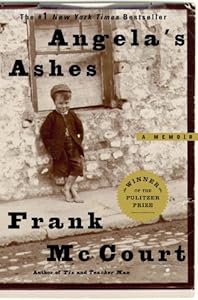
Why the explosion of memoirs?  Everyone has a different story to tell..."everyday" people's lives are interesting."  Yuhas even feels that reality TV is related to memoir.  But the big bang came from the success of ANGELA'S ASHES.

Why do women love memoir?  In memoir, the writer "speaks directly to the reader....from the heart."  They offer a "warm, conversational tone" that women, in particular, are "comfortable" with.  Plus, they often tell stories of family, mothers and fathers and children -- a draw for women, whether in memoir or fiction like Downton Abbey.  And they're stories told "from the heart." Alfaro cites Russell Baker's GROWING UP as one of her favorites.

What's the toughest part of writing a memoir? "Opening up" and dealing with the "sad" parts-- and "what to leave in and what to leave out."

Listen to the entire podcast here:   http://tinyurl.com/lhcwx4s

Read excerpts from Mary Yuhas on Scribd.
Find Barbara Alfaro's books on her Amazon Page

Interview with Barbara Alfaro on writing memoir

Today, I’m posting an interview with author, Barbara Alfaro, author of memoir, Mirror Talk available in paperback and Kindle editions.

First, a little background on Barbara:

A graduate of Goddard College and the American Academy of Dramatic Arts and a recipient of a Maryland State Arts Council Individual Artist Award, Barbara’s essays and poems  appear in various publications. Mirror Talk, her memoir about a Catholic girlhood and working in  theatre,  won the 2012  IndieReader Discovery Award for Best Memoir.


ALFARO: Carla, thanks much for sharing this  interview with your blog.

SARETT:  What’s the source of your interest in memoir?  

ALFARO:  A memoirist weaves the past and present together and that is  a kind of  writing  I find very appealing.


SARETT:  There’s a term “creative nonfiction.” Does that mean that the author is at liberty to play with facts?

ALFARO:  If the facts cannot be accessed through memory or research,  some  memoirists are comfortable with making them up. Another way, the one I chose, is to simply acknowledge   that you don’t remember certain facts.  Fictionalizing a memoir dilutes its truthfulness. A Moveable Feast, the memoir by Hemingway, is a great read but it probably has equal amounts of truth and fiction.


SARETT:  I’ve often wondered about the definition of a memoir, as opposed to creative nonfiction or autobiography.  How do you see the difference?

ALFARO:  Memoir is one of the forms of creative nonfiction and “creative” in this instance does not mean false or imagined, it means true stories so well-crafted that  they read like good fiction. Risking intellectual heresy, I disagree with Socrates - the unexamined life is worth living but those of  us who can’t help examining our lives and reflecting on what we’ve examined are memoirists.  

Autobiography usually tells the  whole story of a person’s life  or a large part of it, in a more formal voice than memoir. A key difference between memoir and autobiography is that the memoirist selects those memories she wants to share. Memoir tells some of the story. Autobiography tells all of the story, sometimes in excruciating detail -- “It was a rainy Wednesday in October, at four p.m., when Granny Utz put the macaroni and cheese in the  Corningware casserole dish that was a gift from her sister Eloise who Granny Utz thoroughly disliked because of the pigtail incident.”


SARETT: I’ve always worried that I wrote a memoir, maybe I’d offend some folks along the way-- not all truths are happy ones.  Did you have similar fears?

ALFARO:  Yes, and I still do but a Pollyanna memoir where there is no sadness or pain and everyone is some sort of angelic presence who never harms another is immediately recognizable as  false. In Mirror Talk, I softened some of my most painful memories with humor  as that works for me in my life and in my writing.


SARETT: There are many choices to be made in the tone of a memoir?  What tone were you were interested in creating and how did you go about achieving it?

ALFARO:  I wanted a warm, conversational tone. A reader told me that she felt like I was sitting next to her when she read Mirror Talk and I thought yes, that’s what I wanted.  I think strong doses of humor help  achieve a gentle, informal tone.


SARETT:  How would you describe your approach to writing, and in particular Mirror  Talk.  Did you pick the incidents first, and build around them, or let it flow?

ALFARO:  I am a poet and, for me, writing poetry is different from other writing, including memoir. The first lines of a poem appear, already written, in my mind and it’s my part to complete the rest of the poem. I know writers  sound daffy when they say things like this, but that is how poetry happens for me.  Writing memoir and fiction is more structured, but I’m definitely a “let it flow” writer. I then make myself a little crazy editing what did flow. I suffer from the perfectionist disorder!


SARETT:  Who are some of your favorite memoirists?  What did you learn from them?

ALFARO:  Nuala O’Faolain, Frank McCourt, Russell Baker, Kathleen Norris, Mary Karr.  I don’t  know that I learned anything. I do know that I admire their courage, their wit, and their exquisite writing.


SARETT: What are your current projects?

ALFARO:  I’m working on a novel tentatively titled Roses and Vices.


You can find Mirror Talk in both paperback and Kindle versions  at Amazon
Related Posts Plugin for WordPress, Blogger...