Showing posts with label horror. Show all posts

International Cat Day: Chopin for Igor by Carla Sarett

In honor of International Cat Day.   This little cat tale first appeared in CONTRARY CATS, an anthology of feline stories, as well as my own SPOOKY AND KOOKY TALES, available on Amazon in a Kindle edition.  

Chopin for Igor

Carla Sarett
The Cat People might well have become, had the times been different, the premiere online community for all things feline.  At its launch party, the brash young CEO, Lily Gold, handed out sparkly pink cat t-shirts— but those souvenirs were all that remained of the company a year later.   
As it happened, I was wearing my Cat People t-shirt when I saw Lily years ago in a coffee bar downtown.  It was late on a pearly-gray afternoon, when the days become short and sad.  When she waved, I admit that I hesitated to join her.  I sensed how raw her defeat was, and her brand of ambition was foreign to me.  Besides, the only cat I had owned had been strangled by the rough boys next door, its neck cruelly broken, and its runt-like body abandoned in the street.  After that, I had never wanted another pet.
I knew nothing about Lily Gold.  For lack of anything better to say, I said, “You must miss working with cats.  You seemed like such a cat person.”  
She did not smile.  “No, I was never a true cat person—not like my sister, not at all.”  And that was when I heard the story of Lily’s younger sister, Rose.
##
Rose Gold rented a house in a small town called Narberth, about ten minutes or so outside of Philadelphia. Her house was no larger than an apartment—it was delicate in structure, with a tiny flower garden and a white picket fence.  It sat slightly behind a far grander house and, in an earlier century, had probably served as servants' quarters, but now was rented out to young singles like Rose. In the large house lived her landlords, Herb and Sally Taylor, who owned an antique store nearby.  All in all, it was an ideal situation. Rose was a quiet tenant, the rent was fairly reasonable and the Taylors were responsible landlords.   Rose and the Taylors saw little of one another.   
A few months after Rose had moved in, a dog-sized gray tabby showed up at her doorstep.  She immediately recognized it as one of the Taylors' cats—they had a few.  Even so, she allowed the cat to enter, taking great pains not to touch it.  The huge animal moved slowly through every room of the house, with complete freedom.  Then Rose prepared a plate of left-overs and watched as the cat nibbled a portion, as though extending her a courtesy.
Over the next weeks, the cat visited Rose at its pleasure – and Rose looked forward to its appearance.  She stocked her cabinets with gourmet cat food, just in case. Sometimes the cat climbed on her sofa while she read and permitted her to stroke its warm soft fur.  And one day, the enormous cat jumped in her lap and purred.  It rested with her for hours until Rose fell asleep.  Rose felt divinely happy.
The next day, Rose found it impossible to concentrate on her work.  Her thoughts were only of the cat and whether it would return that night. To her joy and amazement, the cat was waiting at her doorstep. The cat meowed and brushed against her as she walked through the door. Rose knew that the cat had decided in her favor. 
"It’s strange, but understand, it wasn’t my decision," she let Sally Taylor know.  "I’d never just steal your cat, or any cat. This just sort of happened." 
Sally Taylor was gracious if somewhat chilly.  “What can you do?  We have two other cats, they’re Siamese, and they’re both so sweet and loving, they’re wonderful.”  Her tone implied that this other cat was not as sweet, and, it went without saying, not as loving.  In any event, Sally insisted, “we cherish all of our cats.”
“Of course, I can return him right now,” Rose said quickly.   
“No, I have to respect his decision.  If you ever get tired of him, we’ll gladly take him back, no questions asked,” Sally said.   
Rose almost hugged Sally. “I’ll never get tired of him, don’t worry,” she promised.
“I’m not worried,” said Sally.  “But cats have a mind of their own, don’t they?” 
Rose named her cat, Igor, after her favorite composer, Igor Stravinsky.  She filled her house with catnip and toys and all manner of gourmet delicacies.  She sliced tiny pieces of melon for Igor’s dessert and watched him eat, slice by slice.
She learned the music that made Igor purr—not Stravinsky, but Chopin, especially the Ballades.  Tears streamed down Rose's face as she heard Chopin’s chords and Igor's soft purrs. 
If someone visited Rose – a rare event, to be sure --Igor hid in a large desk drawer, curled in a ball. As Rose entertained, she pictured Igor, waiting for her, soft and warm.  The moment she was alone, Rose opened the drawer, picked Igor up and clasped him to her as tightly as she could.  When she slept, Igor lay beside her, “not too close, just close enough.”  Rose's family became accustomed to hearing stories about Igor.
Their life together went on this way, for about two years, when Rose met Alexei Cohen—an IT consultant brought into her research department at work.   Rose’s family was relieved—Alexei had a natural charm and confidence, an ease with people, so Rose’s solitary ways did not matter to him. As for Alexei, he had no doubts about dark-eyed Rose.  Within months, he asked Rose to marry him and she accepted.
"I’m a cat person," Rose told him.  “My cat found me, I didn’t find him.”
“Cats always find people,” said Alexei.  He had his own cat story -- his family's cat had jumped from a speeding car, on a highway, and had, miraculously, found Alexei days later at his college dorm.  
“That’s the thing, you can never forget a cat,” he said.   
When Alexei stayed with Rose, Igor concealed himself in the desk drawer and only emerged when the stranger left.  “I’m worried, Igor’s so sensitive.  But maybe when two people love him, he’ll feel more secure,” Rose told her sister.
For the wedding, Rose wore her mother's white lace wedding dress, which touched many of her friends and family.  The honeymoon in Tuscany was perfect, or almost. Rose could not hide her fears about Igor.  More than a few times, she called the cat-sitter to check on Igor. She explained, “It’s complicated.  I’m not his original owner.  I never can be absolutely sure.”
Alexei paid little attention.  Everything about Tuscany and dark-eyed Rose pleased him.
Afterwards, they moved into their new house-- a large rambling house, fit for children, and not far from where Rose had lived in Narberth.  It was one of old stone houses on the Main Line, with a graceful circular driveway and rhododendron bushes lining the walkways. 
“Yes, it’s extravagant,” Alexei conceded.  “But I’m in no mood to economize, not now, not with everything ahead of us.”
Rose carefully planned for Igor’s adjustment to his new setting.  She laid down many strict rules: Igor could never be touched without first obtaining permission; Alexei must never play music that Igor might not like; Igor needed time alone with Rose; and Igor must be allowed to sleep with the two of them.   
 The restrictions did not faze Alexei.  After all, if Rose doted on her cat, what of it?  He laughed, "I'd hate to think if you had to choose between Igor and me!"  
Alexei himself loved Chopin and would play the piano for Rose and Igor, as Igor rested on Rose’s lap.  Alexei respected Rose’s rules—and he left them, undisturbed.
But soon Igor sickened. He ignored the pet delicacies that Rose prepared and lost weight. He became a mere shadow of himself, not the enormous cat he had been, but a thin and sad looking creature.  He slept in the closet. He stopped meowing
“We need to take him to a vet, there’s one in town,” Alexei said.
“No, I heard he puts animals to sleep, and their owners don’t even know about it” Rose said, terrified.
"Nonsense," answered Alexei, "How would he stay in business if he were killing cats?" 
Instead, Rose found a holistic animal practice out in Buck's County, over an hour away, who offered daily treatments.  Her trips to Buck’s County consumed Rose’s entire day – she had to give up her job. Following instructions, Rose administered Igor's treatment one drop at a time, with a tiny eye-dropper. She purified the house, discarding any toxic material that might contaminate Igor’s fragile system, which was smaller than a human’s.  Igor remained sick and unresponsive.
Alexei’s work took him to other cities—like many consultants, his work schedule was beyond his control.  When he called Rose from airports or hotels, he heard only about Igor.  Alexei was patient, but in truth, he knew that Igor was simply an ordinary cat-- and he knew that cats die, especially when they are denied normal medicine.  But there was nothing unkind about Alexei Cohen.  At airport gift shops, he searched for little cat gifts and souvenirs for Igor.
Rose visited a spiritual counselor for animals who was famed throughout the area for saving lost causes.  “It’s his past life that’s killing Igor.  He once lived with a family who beat him. He’s signaling his past life,” the counselor said.  “You need to assure Igor that the present and the past are not the same.”
Every night, Rose whispered to Igor, we love you--no one’s ever going to hurt you again.  “He’s traumatized,” she told Alexei.  “It’s natural that he’s so weak.  He needs our help.” 
Alexei said nothing.
For weeks, Rose sat alone with Igor.  She never turned on a single light.  Alexei left silently in the morning and removed his shoes when he returned home, in order to avoid any unnecessary sound.  But he still played Chopin for Rose and Igor.  Sometimes, the two of them fell asleep together. 
And then Igor vanished.  Rose searched everywhere – her desk drawer, the garden, the attic, everywhere, but he was gone.  Igor had been allowed to roam outside, but he had never failed to come home.
“Cats always come back,” said Alexei, as he stroked Rose’s hair.  “He’ll get hungry, and he’ll come back.” 
Alexei posted signs around the neighborhood, "Lost Gray Tabby"-- on telephone poles, at the local supermarkets, anywhere that signs could be hung.  Many kind people called about stray cats, but none of the reports fit Igor’s description.  
“Yes, Igor showed up for a day, but then he left,” Sally Taylor said when Rose called her.  "You never know with cats, do you?" 
Each long day of cat-hunting became the same as the long day before.  Rose woke before dawn.  She drove around Buck's County and around the neighborhood of her spiritual counselor. She walked through every park and past every house. At home, she stayed on high alert for the merest hint of footsteps or meows or a faint scratching at the door.
All of this made no difference to Alexei’s feelings about Rose.  She was what he wanted.
One night, when Alexei was out of town, Rose awoke and heard a meowing in the distance.  She must have suspected or hoped that it was Igor—and she walked down the narrow road to find him. It was pitch black and the road had no sidewalks.  Rose was invisible in the darkness—her back faced the cars.  The driver who hit her had no idea she was there, according to the police report.  She was dead by the time Alexei's plane hit the ground.
Alexei Cohen delivered his wife’s eulogy.  He spoke of all that he loved about Rose, of the impossibility of her early death and the hollowness that stretched ahead.  “But,” he warned, “The future is there, whether we want it or not.  We will do the best we can.” 
About a month after Rose’s burial, Alexei opened the door and discovered Igor, sitting very still.  He held the door open – Igor brushed against his legs and meowed until Alexei picked him up. Alexei sat down at the grand piano and played Chopin for Igor.
"He's a cat person, now," Lily Gold told me.
--
You can buy SPOOKY AND KOOKY TALES here


Bites from 13 Bites, Vol. 3


For our final Halloween Fright Reads, news from editor, Alan Seeger about his latest horror anthology.  (I participated in 13 BITES: VOLUME 1.)

The 13 BITES series began as an idea that I presented in a Facebook group in 2013, asking if anyone would be interested in doing a short story anthology; the response was so overwhelming, I decided to do it every year.  So 13 BITES Volume III, the third in the annual horror anthology.


A few nibbles from the bites from this year's installment:


The man was still there, as still as a statue. And so was the body.
-- THE NAIL IN THE COFFIN, Sarah Brett


“I’m not here to bargain,” she snapped at him. “A potion comes with five years, not a day more.”
-- FINE DINING, J. A. Clark


“You kind of do, but the tour is very informative, I highly recommended it, and here’s a little welcome present to help calm your nerves...” Satan made a popsicle appear as if by sleight of hand, and handed it to Danny.
-- DANNY’S INFERNO, Joseph Picard


The fresher the corpse the better, he reasoned; it would look more natural, and bits were less likely to fall off it.   
-- DANSE MACABRE, Tabitha Ormiston-Smith


There in front of him lay Alice. She was still alive, but not for long.
-- THE EVIL DEED, Bruno Santos


“Chimpanzees,” Neil corrected him. “If they were from Earth they would be closer to chimpanzees.”
-- ORANGE AND RED AND REDDISH ORANGE, Thomas Hansen
At that precise instant the sky seemed to kiss the earth, reducing the man’s field of vision to a single purple-black flash of light. Time passed – minutes, possibly hours, the man could not tell which.
-- ONE MAN’S ONE YEARS’ NEW YORK TIMES, Luke Jon Isbrecht


A person can only take sitting in an uncomfortable chair for so long before he or she begins to look for somewhere else to sit, and sit she did; she sat on practically every guy they knew.   
-- THE KILL KIT, Alan Seeger


Maybe if I hadn’t stopped for gas on the way, or remembered to switch off my cell phone, or even make sure I had locked the boot of the car, would have been a good start.
-- STACEY WALLBECKER, Gregg Cunningham

Interview with Horror Author, Scott Zavoda

Today’s interview is with short fiction writer Scott Zavoda, another short fiction writer whom I’ve discovered through Goodreads.  His recent story collection is Alone at Midnight:  Short Horror Collection.


A few words about him:
After hearing enough of my right brain argue with my left, I gave in and began writing. That was five years ago. I’ve never looked back and find this passion works well with my career (as an airline pilot) in that I have plenty of time to put my crazy ideas down on paper.


SARETT: You’ve written horror and scary fiction. What attracts you to the form?
ZAVODA: Horror reaches deep and tickles your soul. And when done just right, you can’t look, yet you can’t look away. You’re curious not because you’re exposed to new terrifying things, but because these fears already exist and your subconscious demands to see how things will pan out.


Horrors hide in the mundane.  It’s this variety I like to write about. Who’s to say the quiet lady in the last church pew every Sunday isn’t slipping something into the communion wine?  We’re hardwired the same: we know what to seek and when to run as if imprinted in us. Horror, at least to me, provides a relief valve, a healthy means to understand our real life monsters in a make-believe world.  


Mostly, horror draws me because it holds power over all ages. You may think you’ve banished your childhood fears. You tell your children the bogie-man isn’t real. But then why do you sometimes wake alone on a still winter night and wonder what that scratching sound might be? When the witching hour is upon us, age and maturity are out the window.


SARETT: There are lot of rules about what’s good writing and what’s bad.  Is there any rule that you secretly enjoy breaking?
ZAVODA: When my brain itches, I scratch it. I write what I want to write. Period. I don’t ignore my audience, but I do try to avoid the conventional wisdom of writing what’s popular now. Oh, if you want the nerdy answer, then yes . . . I occasionally use slang, begin sentences with conjunctions, and end them with prepositions. And I don’t plot. Not because I think it’s wimpy but because my characters rarely grow that way;  I’m much happier being on the ride than waiting for it at the exit corral.

SARETT: Do you think men and women have a different sense of what is scary?
ZAVODA: Yes and no. Men may fear commitment, botching their wedding vows,  or getting the common cold, while for women it might be becoming their mothers, getting lost on an unfamiliar drive.  We are as much a product of culture as culture is a product of us.
Yet nothing is true all of the time. In fact, I remember a male friend growing up. Whenever we saw a horror movie he would curl into a fetal position and make horrible retching sounds at the first sight of blood.  Meanwhile, plenty of female moviegoers leaned forward greedily as if they couldn’t get enough.


We all have our issues, but inside we fear the same. Whether you’re boy or woman, girl or man, you’ve (at one time or another) thought that the basement door above you will slam shut, the lights will snip out, and something will skitter across the cold concrete for you.


SARETT:  Some horror writing depends explicitly on the supernatural, and other writing is purely psychological (e.g., Shirley Jackson’s We Have Always Lived in the Castle.)  What’s your preference?
ZAVODA: Employing consistency with just one would disservice my readers. Horror is characters facing the unknown, and better said, readers facing the unknown. Holding to one type, the stories would fall into very predictable but not-very-scary molds. I have read brilliant books driven by psychological elements, but I have not found any where the supernatural exists without a psychological.


SARETT: Lots of writers, including the estimable Henry James, have toyed with the ghost story.  What is it about ghost stories that writers love?
ZAVODA: Ghost stories intrigue us because they explore the possibility that beside our world is another, where shadows separate the living from the dead, that the end of the body is not simply the end. These stories have survived time because they scrape the truth of the matter—giving meaning to death, giving rise to those who’ve passed without letting them go completely, giving the deceased another chance in a world which has forgotten them.  Ghosts always seem to want something more than just to scare us.   

SARETT: Any lessons from the world of self-publishing that you’d like to share with our readers?
ZAVODA: Don’t get ahead of yourself. Don’t edit your own writing. Don’t create your own cover unless you’re a skilled fiction cover designer. Indie doesn’t mean do it ALL yourself. Indie means giving yourself the freedom to be creative, opening doors that weren’t open before, telling the world your story YOUR OWN way. But take your time. Be patient. Find the professionals that will make you professional. Best of all, enjoy being self-employed.


SARETT:  What are your current projects -- and is there any new horror in the works?
ZAVODA: I have a novel with a planned release in 2015. I can’t say much more about it, only that you can stay up to date and receive advance peeks by signing up for my VIP email list.  


Find Scott's ebooks on Amazon
Follow Scott on Facebook

Interview with Horror Writer, Paula Cappa

Today’s interview is with short fiction writer Paula Cappa, another fiction writer whom I’ve discovered through Goodreads.


A few words about Paula:
I am a reader. I write because I love to read and love the world of imagination. Stories are like food to me and I delight in stories every day.


SARETT: You’ve written horror and scary fiction. What attracts you to the form?
CAPPA:  The supernatural is so mysterious and unlimited. That dark other side opens doors and windows to the  imagination, and we can leave the confines of this physical world. I prefer ghost stories and more “quiet horror”  than the high violence that some horror novels have.

SARETT: There are lot of rules about what’s good writing and what’s bad.  Is there any rule that you secretly enjoy breaking?  
CAPPA: I hate all rules and I like to defy every single one of them. For example, many say rule number one is never start your story with the weather (It was a dark and stormy night.)   Of course you can start your story with atmospheric settings or descriptions, as long as it relates to the character or the plot in a compelling way.

SARETT:   Do you think that men and women have a different sense of what is scary? 
CAPPA: In terms of horror, not really. Monsters, vampires, ghosts, evil, these all have the same powers over humans in general. Fear is more individual, I think.
I do think women writers have been overlooked through the years (through the centuries) Calling readers’ attention to women writers today is a way of compensating for the rejection and suppression that women writers have endured. The publishing industry has been male dominated; today things are changing. In horror, men have dominated the genre. As we pay more attention to women authors, this domination will hopefully lessen.


SARETT:  Some horror writing depends explicitly on the supernatural, and other writing is purely psychological (e.g., Shirley Jackson’s We Have Always Lived in the Castle.)  What’s your preference?
Cappa: I prefer the supernatural. But when you mix supernatural with psychological, this is a very heady story!


SARETT: Lots of writers, including the estimable Henry James, have toyed with the ghost story.  What is it about ghost stories that writers love?
Cappa:  Again, it’s that mysterious other side of death and making that real to us as writers and to the readers. Making the ghost real is the mysterious challenge, one that I can’t resist.


SARETT: I noticed that you’re a big Hawthorne fan.  What do you think that modern writers can learn from his work?
Cappa: His prose is smooth as silk, a good lesson in pace, word choice, and rhythm. Characterizations are fully drawn. But his motivation to write was key. Hawthorne claimed to have seen ghosts and used that belief to flavor his fiction. He also used his family history to inspire his fiction. So, using your own life in your work is a key ingredient.


SARETT: I’m always trying to discover new interesting (or forgotten) short fiction writers.  Do you have suggestions for our readers?   
Cappa: The more we read the classics, the more we grow as readers:
--Carmilla by Joseph Sheridan Le Fanu, a vampire story, suggested lesbianism at a time when such things were not popular.
--The Yellow Wallpaper by Charlotte Perkins Gilman is unforgettable.
--Ancient Sorceries and Other Weird Stories by Algernon Blackwood. This author is not only atmospheric but his prose strikes deep with horror.
--The Ash Tree by M.R. James is a page turner.


SARETT: Any lessons from the world of self-publishing that you’d like to share with our readers?
Cappa: Treat yourself and your work as a professional.  Keep writing. Keep learning the craft. Keep publishing.


SARETT:  What are your current projects -- and is there any new horror in the works?
Cappa: I’m working on a Lovecraftian short story. I have a third novel that is drafted. In October, I have a ghost story (published in Whistling Shade) that takes place at the Old Manse in Concord, Massachusetts.


Follow Paula here:  


Find her ebooks on Amazon:
Paperback editions to be released, November 2013, CrickHollow Books.


Short stories at Smashwords:
Abasteron House, first published in Every Day Fiction
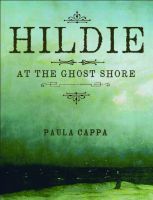
Hildie at the Ghost Shore, first published in Fiction365
The Haunting of Jezebeth first published in Twilight Times

Related Posts Plugin for WordPress, Blogger...