Showing posts with label Daphne Du Maurier. Show all posts

Recommendations: Women's Scary Fiction for Halloween

I love scary stories of the literary variety .  As some of you know, I have flirted with ghosts in Nine Romantic Stories, in "A String Theory Valentine"-- and even wrote a "Happy Halloween" Tale that is now available in an Amazon anthology, 13 Bites.  What better way celebrate Halloween than reading some good old-fashioned spooky tales?  But for my money, some of the chillier chills come from women writers -- more inner demons and fewer of the flying variety, more psychology and less gore.

So here is my list for stories that sent some literary chills down my spine that make for perfect Halloween reading:

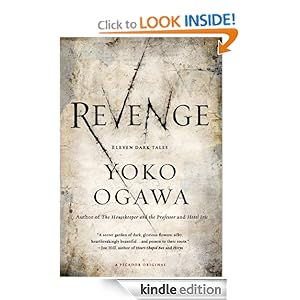
 Revenge by Yoko Ogawa.

These exquisitely dark tales by this contemporary Japanese writer are in the great tradition of weird and wonderful-- and I first learned of them through our own interview with Jessica Treat ( who recommended them.)  This author has a peculiar sense of the macabre that must come from the food they eat in Japan.  A woman buys a cake for a dead child, and another visits a museum of torture.  Spooky and fantastic.


Ghost Stories of Muriel Spark.
 I am a Dame Muriel addict, and gleefully devour everything she's written. And those familiar with novels like The Bachelors might be prepared for some dark, wild story-telling-- Spark always surprises.  But Dame Muriel also had a way with ghosts. It's fun to see her wicked prose tangle with the supernatural -- sometimes to comic effect, and sometimes to scary.  One of the best here is a first person narrative -- a lost ghost waiting to find her own death.


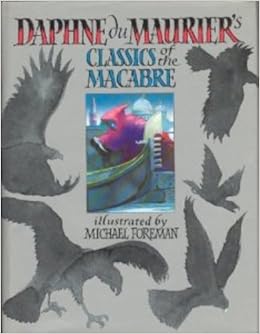
Classics of the Macabre by Daphne du Maurier.  

Mention Daphne du Maurier, and most people think of the Hitchcock films, The Birds and Rebecca.  Some may recall the Nicholas Roeg film, shot in Venice, Don't Look Now.  But the original stories, especially those in this volume, are far better than the films.  "The Apple Tree" is as frightening a tale of marriage gone wrong as any I have read -- and the original, "Don't Look Now" is lyrical, mysterious and terrifying.  I found this book in a gorgeous edition with illustrations by Micheal Foreman.


The Ghost Stories of Edith Wharton


This is another case of who knew?  Yes, it's the very same Edith Wharton who wrote The House of Innocence and Ethan Frome  (which as I think about it, is a very scary tale.) It turns out that Wharton had a flair for the classic ghost tale. I'm guessing that her affinity for Henry James (whose Turn of the Screw is one fantastic ghost story) led her to the genre-- but, read and you will see, she's no slouch.  Wharton loves the idea of old haunted houses, and she is great at those stories.  But to my tastes, her mastery is best shown in "Miss Mary Pask," in which the narrator falsely believes he is speaking to a dead woman and where "night and fog were now one." A perfect Halloween tale.


We Have Always Lived in the Castle by Shirley Jackson.

To me, this might be Number One on the all time spookiest books ever written.  Jackson doesn't need the supernatural to scare the living daylights out of you.  Her story of women who lock themselves into their own house is more frightening, more upsetting, than stories of demons or ghouls. Isolation is scary.  If any book can haunt you, it's this one -- and for years after you put it down.  

Interview with Jessica Treat about writing short fiction

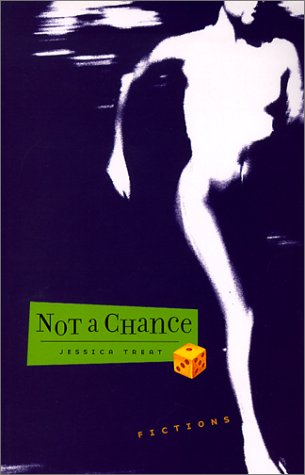
Today’s interview is with writer Jessica Treat who has authored the story collections, A Robber in the House, Not a Chance, Meat Eaters and Plant Eaters, which can be found on Amazon.


First, here’s some background on Jessica:
Along with three story collections, Jessica Treat’s short fiction has been published in numerous literary journals and anthologies.  In addition to writing fiction, she translates (from Spanish) and is Professor of English at Northwestern Connecticut Community College where she coordinates the Mad River Literary Festival, now in its 17th year.  The recipient of an artist fellowship award in Fiction from the Connecticut Commission on the Arts, Jessica has held artist residencies at Civitella Ranieri in Italy and Fundacion Valparaiso in Spain. Born in Canada, she grew up in New England and lived for a number of years in Mexico City and Brooklyn, New York before settling years later--again--in New England.


SARETT: You’ve written a good deal of super-short stories, which go by the name of flash fiction. What appeals to you about the super-short story?
TREAT: It’s a versatile and exciting form with a  long tradition. Think of parables, fables, fairy tales and animal tales, Kafka’s short parables, James Thurber’s ‘Fables for Our Time.’   It’s a good vehicle for surrealism, humor and playfulness. But in the right hands so called ‘traditional’ stories are also well- served by the form; think of Kate Chopin’s “The Story of an Hour” or Hemingway’s “Hills Like White Elephants.”  
I’m a writer who tends toward concision, compression,  and while I do work with longer forms, novellas and long stories, it’s the very short form that comes most easily.  At the same time, as someone who as a young writer was pushed toward poetry, I would say it is story  that interests me: language and story. So while I write prose poems occasionally, these are a different beast for me.


SARETT: What do you think is the key to a successful super-short story? Do you think it’s different from writing a, say, 3000 word story from a technical POV?
TREAT: My first published work was in a magazine (now no longer) titled Paragraph.  The journal was soliciting stories of 250 words or less. So I set myself the goal of writing for them. It was always a matter of writing, writing, writing, and then cutting, cutting... getting the story down to 250 words or less.  It’s a matter of making each word work and of suggesting much more than what is said.  Extra words or sentences can dilute a story, make it less potent.  But as with any good story, there needs to be a conflict of some sort, a shift, however small.  I was published in the first five issues of Paragraph and several more after that. It was terrific training for me in this super-short form and I’m grateful to the editors for their back-and-forth with me during those early years.   
But in answer to your question: Is it different from writing a more traditional story? Yes, in that you have much less space...so, it better be good.  But the same ingredients--setting, character, point of view, etc.--are there,  just that the emphasis might be on one of these.  Still, there’s something instinctive, isn’t there, about what makes one story work and not another?


SARETT:  You’ve said that short stories are closer to poetry than to novels.  Were you referring to all short stories or more to your own work?
I wasn’t thinking about my own work, per se. I was thinking about the economy of language, the compression and the sort of concentration needed as a reader--it’s different from what’s needed with most novels, where one can get swept away, as it were, for a number of hours or even days. A good poem asks for a close reading and then a rereading, and I think a good short story does, too.  The old adage about how every word counts in a short story is true. A novel asks for subplots, digressions and  numerous threads.  There's a crystallization in the short story and poem--where a relationship, conflict or situation is distilled to its essence.


SARETT: Women writers (e.g. Munro) have been attacked for focusing on unstable women and denying them happy endings.  What’s your response to this point of view?
TREAT: That’s silly.  No one woman writer represents all women just as no male author represents all men or all possible ways of telling a story.  There are unstable women--indeed, people-- in the world just as there is unhappiness.  Why should one not write about that?  I dislike prescriptions, taboos, and am apt to want to break them as soon as I hear them.  But more importantly, writers create out of their obsessions--the same terrain may be explored again and again in different ways. 
As an  undergraduate I studied briefly with a painter, Marilyn Frasca. When I voiced something of this to her---that I was writing about the same theme in different stories--she told me, “I’ve been painting the same bay for 30 years.”  Implicit in her statement is the idea that from obsession comes art, and that the bay would never look exactly the same from one painting to the next. There are so many times of day, shades of light, seasons and our own moods to influence a painting--or  a story.  And it is through such an extended exploration that one comes to a more nuanced perspective.
Finally, readers need to realize not every story/author is for them. If Munro’s women seem too unhappy (I wouldn’t have thought of them that way), they can read someone else. Joyce Carol Oates, say. :)
(This reminds me of years ago when I told my mother I wanted to write fiction--I was a young teenager--her response was: “Oh...women’s novels are always so depressing...like Joyce Carol Oates.”) Oates explores the darker side of our nature. She’s a masterful short story writer as is Munro.


SARETT: You write with good deal of darkish humor, which I find very funny.  I know that you’re a professor.  How do students and younger readers respond to this kind of humor?    
TREAT: Well, first of all, I don’t teach my own stories.  It would be wrong to require students to buy my books. But students do hear me read from my work and come to it on their own.  I think they like the humor, though it’s often very dry.  
I think humor is so important: in fiction, in people, in life. Life can be hard. Humor provides a perspective, a way of coping.  I use humor all the time in the classroom.  I like to laugh; I like to make others laugh.  Humor comes from the unexpected, unanticipated connections. I like that.

SARETT: You’ve lived in Mexico City.  How does this figure into your writing?

TREAT: Mexico City is a place I fell in love with as a young person. It was  a love affair and relationship much like any other. It’s a place that gave me so much and one that I continue to feel attached to. Several stories in my second book, Not a Chance: Fictions, are set there.  
I’m not sure how it figures into my writing at present--it’s been years since I lived there though I continue to visit-but setting is important to me in my writing and reading, and I’d like to feel I’m adding to the canon of Mexico City stories. It’s a beautiful, cosmopolitan, cultural and historical city (going back to the time of the Aztecs: Tenochtitlan), and one of the largest in the world.


SARETT: I’m always trying to discover new (or forgotten) interesting short fiction writers.  Do you have any suggestions for our readers?  
TREAT: Oh, there are so many good writers and my tastes are so eclectic.  But I’m happy to name some current favorites. 
-- The brilliant French-African writer Marie NDiaye: her novel Three Strong Women. I am looking forward to reading her story collection, All My Friends.  
--Toddler Hunting and Other Stories, by Japanese writer Kono Taeko. I cannot recommend her work highly enough.  Each story has the complexity and richness of a novel..  
--Robyn Sarah is a well-known poet in Canada, but has at least two collections of short stories, both excellent.  
--The short fiction of Daphne Du Maurier, a master of suspense, setting, and character.   
-- Jackie Kay's short story collection, Wish I Was Here
-- The short stories of Roberto Bolano and Javier Marias.  
-- Nava Renek’s short story collection, Mating in Captivity is great fun.


SARETT:Your books are currently available in print only. Do you have plans to make them digital?

TREAT: When Meat Eaters and Plant Eaters came out, I was told it was also an E-book, but I don’t see evidence of that, so I’ll have to look into that.  I spend a lot of time online and don’t enjoy reading fiction that way, but I realize it’s a good way to make one’s books available. You’re motivating me to look into this possibility, Carla.


SARETT: Tell us about other projects that you’re working on.
TREAT: I’m always writing stories. I’ve a good number started now that I need to finish. I have also started a memoir piece about the year my family lived in a small fishing village in Spain; this was 1969 when I was eleven. 
I am also keen on translating contemporary Mexican writers, particularly prose poems and short fiction.
Thanks for the opportunity to think about and answer your questions, Carla. It’s always wonderful to engage with another short story lover.


Find Jessica here: www.jessicatreat.com and on goodreads and facebook.

Find Jessica Treat's books on Amazon , other online sellers and at her publishers:

Stories of Jessica Treat online:
“Drive”  from PP/FF :
“His Sweater” in Old Dominion Review, via WebdelSol:


Related Posts Plugin for WordPress, Blogger...