As part of a series of recommendations from authors, we’re hearing from novelist and poet, Kathryn Kopple whom we interviewed here. Kathryn is a regular contributor to Unusual Historicals and the author of Little Velásquez, a novel set in 15th century Spain.

This past year, during the course of researching various topics, I delved into history. Drum roll, please:
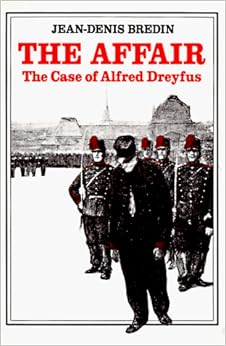 The Affair: The Case of Alfred Dreyfus by Jean-Claude Bredin (trans. Jeffrey Mehlam)
 “The Affair,” as the Dreyfus case is known, began after the Franco-Prussian War (1870-1871). Bredin is a meticulous researcher. His style is lucid and his grasp of history remarkable. He does great justice to Dreyfus’s long ordeal: arrest, conviction, exile on Devil’s Island, and eventual release.
 The Kidnapping of Edgardo Mortara by David L Kertzer.
 In 1858, a Jewish boy was taken from his home by the Italian Inquisition under the suspicion that he had been secretly baptized by his Christian nurse. In many ways, a sad story, but one that will leave the reader puzzled and not a little disturbed--and that is actually a good thing.
The Generation of 1914 by Robert Wohl
Finely crafted essays that should be required reading in college. Wohl takes us deep into the broad cultural background of World War I, and helps us to understand the mentality and works of its important figures.
Finely crafted essays that should be required reading in college. Wohl takes us deep into the broad cultural background of World War I, and helps us to understand the mentality and works of its important figures.

The World’s Most Famous Trial: State of Tennessee v. John Thomas Scopes (Da Capo Press)
The Scopes Trial is a landmark 1920's case that pitted Christian fundamentalism against Evolution. It reads like the dialogue for a great screenplay, but the consequences of the trial are with us today. The debate is not over.
The Story of My Life by Clarence Darrow (1932)
Darrow is one of the United State’s legendary lawyers. Revered by many--and equally despised. In this account (I have heard there are several Darrow autobiographies), he writes with candor about his childhood, schooling, and career. Darrow was a firm believer in every man (and woman’s) right to a vigorous defense. The reader has much to learn about the politics and legal system in one our most tumultuous eras.
Darrow is one of the United State’s legendary lawyers. Revered by many--and equally despised. In this account (I have heard there are several Darrow autobiographies), he writes with candor about his childhood, schooling, and career. Darrow was a firm believer in every man (and woman’s) right to a vigorous defense. The reader has much to learn about the politics and legal system in one our most tumultuous eras.
The History of Ancient Israel by Michael Grant
A wonder of research, rich in historical detail, and accessible. I couldn’t put this down. This work is a must for those interested in ancient Jewish culture as well as the Old Testament.
A wonder of research, rich in historical detail, and accessible. I couldn’t put this down. This work is a must for those interested in ancient Jewish culture as well as the Old Testament.
Francois Rabelais: A Study by Donald M. Frame
Francois Rabelais (circa 1480-1553) is one of the most enigmatic figures of the Renaissance. He was a monk, scholar, translator, and physician. To this day, we cannot separate Rabelais the physician from his comedic writings and enthusiasm for pleasure. The man who wrote Gargantua never deviated from the position that laughter, even in the face of disease and death, is the best medicine.
 The Sexuality of Christ in the Renaissance and in Modern Oblivion by Leo Steinberg
Steinberg was no doubt a genius. In this remarkable feat of scholarship, he takes us on an unforgettable tour of Renaissance art, rounding out his analysis with the theological background necessary to comprehend some of the West’s greatest paintings.
From Napoleon to Lenin by A.J.P Taylor
A background in European history is needed to appreciate this book of collected essays, but it deserves a read. Taylor is nothing if not controversial, and he raises many necessary questions.
A background in European history is needed to appreciate this book of collected essays, but it deserves a read. Taylor is nothing if not controversial, and he raises many necessary questions.

Just Kids by Patti Smith
Legendary punk icon writes with energy and love about her early years in New York; how she and Robert Mapplethorpe formed a friendship that would last until his demise; and her own story of coming-of-age as a musician and poet.
Also, but not history: Dr. Bird’s Advice for Sad Poets by Evan Roskos, which depicts “the awkwardness of unrequited crushes, an unstable home life and mental illness." This book deserves a place in school and classroom libraries. Roskos brings a unique voice to the young adult genre as he weaves the tried and true poetry of Walt Whitman, especially Song Of Myself, in with the poetry of his protagonist, James Whitman.” Recommended for all ages.
Find Kathryn online:
Website: http://unusualhistoricals.blogspot.com/
Facebook: https://www.facebook.com/kathryn.kopple
Twitter: https://twitter.com/KathrynKopple
Books are available here: 


