Showing posts with label Amazon. Show all posts

Yawn, authors protest against Amazon's power

Another day, another complaint about Amazon's "unprecedented power over the book publishing market."  Only this time, it comes with a new twist.

Authors -- famous ones, in case you haven't guessed-- are asking the U.S. Department of Justice to begin an investigation on what (they claim) is a monopoly.  The Authors United group (you can't make this stuff up) has formally submitted their urgent request.  They even collected one thousand signatures for a letter directed at Amazon.  The U.S. Justice Department said that the agency "will review" the group's materials.

Ursula Le Guin laments:  "It does not seem wise to let one entity control such a big part of our emotional and cultural core."  Apparently, Ms. Le Guin believes that such matters are better controlled by a larger entity, namely the government.  I'd venture to guess that she discards the "emotional and cultural" contribution of the huge independent, self-publishing market which Amazon has helped spawn.   Presumably, that's not part of "our" core.
  
In case you missed the opening scenes to the drama:  Hachette decided that it didn't like Amazon's pricing policy, and went off in a tiff, so it could keep e-books priced as high as Hachette pleased.  Eventually, Hachette got its way.  Prices rose.

But did profits?  I doubt it.  I was on the road to adopting Kindle-style books...that is, until they got to be the same price as print.  I don't think a digital book is worth what a print book is. To me, it's a compromise.

Where did I turn?  I decided that many, if not most, of the books I wanted could be purchased through Thriftbooks and other sellers, used.  The Internet makes buying used books a snap. You can even filter by condition.  Before the web came along, I never bought used books.  Now, especially with rising digital book costs, I usually do.  On a per book basis, publishers earn less from me. Talk about boomerang.

Amazon can't control that, of course-- any more than Ms. Le Guin and her fellow authors can control technology.


Scribd and Oyster: Not the Netflix of books

I read a lot so I was intrigued to hear about Scribd and Oyster, two entries into the "e-book subscription" business.  A low monthly fee for all the books you can read, which sounds like a great deal.  Both services have prompted comparisons to the the streaming video (and DVD rental) service, Netflix.

"The new Netflix," say reviews.  Are they really?

Hmm, not so fast.

Netflix started as a DVD rental alternative with a far deeper inventory, especially of rare, foreign and classic films, than video stores. When streaming video arrived, savvy Netflix offered series from Showtime, HBO and the BBC, mostly to compensate for the meager inventory on the streaming video side.  For many subscribers, who combine DVD with streaming video, Netflix remains the best place to find films and TV.
 
Product DetailsSo how do Oyster and Scribd perform?

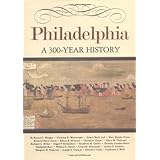
I do love reading about Philadelphia history, especially of the Revolutionary War period. I own quite a few books, but wanted more.  So, I hopped over to Scribd and searched "Philadelphia history."  My search yielded mostly sports books or fiction (?)  On Oyster (which required payment info before I could search!) browsing looked tough.

In case you're wondering,  Amazon quickly spit out a list of 16 books.   I bought a few.  I think we're a long way from a Netflix of books.  

Amazon vs. Hachette: annals of dopey battles

Oh, the irony.  A big fat publisher who represents big authors is now the hero in a fake David vs. Goliath tale.  Hachette, one of the companies who fought to keep e-book prices high (as high as their print counterparts, in many cases) is now whining that it just can't get a good deal.  And Amazon, which has revolutionized book-selling as well as publishing, is characterized as a "bully" that is trampling on Hachette's invented rights.  

In fact, Hachette has lots of other big retailers to hawk their books, just as Amazon has lots of other content for consumers to buy.  Those brand-name authors who are losing "pre-sales" hardly lack distribution channels.  If a reader is dying to read, say, Kate Atkinson, she can find Kate on at least six other online retailers, including iBooks-- online, it's a click away.  (Isn't content supposed to be king?  Would I stop reading an author because I couldn't buy on Amazon?  I think not.)

What's the reality?  Not only are readers addicted to sales (in clothes, in stores, everywhere,) but they are becoming increasingly addicted to free content (which, in digital, is ubiquitous.)  Inflating prices (which is essentially what publishers like Hachette want) is in no one's long-term interests as Hugh Howey argues in The Guardian.   Higher prices will mean, ultimately, fewer readers for everyone.  Now, that's dopey.


'via Blog this'

It's not just about the positive reviews


Among authors, there is a big debate:  do on the positive reviews matter or can readers be swayed just as much by the negative ones?  I asked TV programming strategy pal (and fellow bookworm) Judith Orlowski to weigh in on this-- and think about at least one book that she found online.  (You can find her on Linkedin.) 

Here's what she has to say:


I was looking for a book at a time when life was just not as much fun as it used to be. 
Normally I don't read comedy but thought this time, why not?  

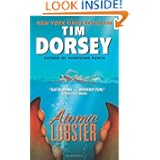
I scanned the Usual Suspects -Amazon, Bookbub and so on.  Then on Goodreads, a certain (unknown) reviewer mentioned that Tim Dorsey had another novel out with his demented serial killer protagonist Serge. The novel was called Atomic Lobster.  I knew that this wasn't going to be just any old killer.    

I bought it-- and then I read by tiny kindle light while my husband slept.  By the time that Serge and his drug addled sidekick were debating the relative aesthetic merits of straight-to-video release of "Bum Fights" vs. the sequel to "Clowns versus Mimes", I surrendered to tears of laughter.  I have read others in the series (there are over a dozen) -- but few are as funny as this one, in which Serge rids the country of scumbags.   

Here is what I did not mention: the Goodreads reviewer hated the book!  But he or she described it in a way that it sound like "my kinda thing."  I don't remember the name of the reviewer or the phrases that made me snag the book.  But let me say thank you-- wherever he or she may be.

Amazon.com: Marie Fitzpatrick's review of Nine Romantic Stories

So pleased to read this review today from an editor whom I admire, Marie Fitzpatrick of The Linnet's Wings. In her review, she says:  "And when I finished it, I wanted more."  Those the words that an author(ess) wants to hear!

Amazon.com: Marie Fitzpatrick's review of Nine Romantic Stories:

'via Blog this'

Kindle Store's Marketing Challenge

I don't want to pick on Amazon or the Kindle Store.  I am a voracious reader, and the miraculous invention of books that magically appear in my living room is too wonderful for words!

But as an author, here's my problem.  I sent some gift copies of my new short story collection Nine Romantic Stories to a few friends and family members around the holidays. Here 's a sample conversation:

"I can't read your book because I don't have a Kindle."

"But you don't need a Kindle.  You can read Kindle books on phones, tablets, or your PC."

"But doesn't a Kindle book require a Kindle?  Why would it be called a Kindle book?"

"No, no, it's a Kindle book because it's, uh, sold in the Kindle Store.  It's not a book that's made only for a Kindle.  You can download software and read it anywhere?"

A few hours later, I received the following, "I don't know where to download it, and I don't see anything on the website that helps me find the Kindle Cloud Reader."

So, I had to walk through the options:  you can download the Kindle reader through your iPad apps, the Google Play Store or other smartphone apps, or, yes, you can dig it up on Amazon-- but try doing a search for Kindle Cloud Reader in the Kindle Store (where you'd expect to find it, no?)  What you get is a list of books about the Cloud Reader-- and oh yes, a small (for leprechaun readers) note at the top about the software.  No wonder she hadn't found it.

The long and short of it is I suggested, "Go to Google and search for Kindle Cloud Reader" and presto, the Kindle Cloud reader  appears.  (Yes, now you have the link too!)

I found blog posts that suggest to new authors that they send emails explaining how to download the Kindle Cloud Reader-- or else, they lose sales.  Now, Amazon and authors have one shared goal, which is to sell more books-- but they divergent goals about selling Kindles.  Is that why the software is hidden-- so that Amazon sells more Kindles?   Maybe, or maybe it's yet another example of poorly designed navigation.  Either way, it hurts authors.


Kindle Preview: Beware

I love Amazon and I'm thrilled at all the new developments in self-publishing.  So, I was expecting to find formatting and uploading my short story collection to be a straightforward exercise.  I'd bought Amazon's own manual and followed it to the letter.  Generating the web-filtered HTML file was simple.  In fact, nothing seemed to be a problem.

Nothing, that is, until I used Kindle Select's own "online previewer."  The web instructions suggested that most authors could use this without any problem.  So, I previewed the story collection for every device.  Obviously no author wants a reader to be disappointed with formatting-- and the Table of Contents is especially critical in e-books, not to mention story collections.

The stories looked great for iPad and iPhone-- and I thought that I was off and running.  But weirdly, the previews for all Kindle devices (Kindle Fire, Kindle, Kindle Fire HD) suggested a deep problem.  One of the stories appeared with large chunks of missing text-- clearly, unacceptable in a story collection.  Also, in the Kindle (but not, mind you, in the Kindle Fire,) the Table of Contents was inert.  Bummer!

Back I went to the HTML file, and over and over, I tried to find odd code or bits that would explain why this particular story, which had been published in Danse Macabre Magazine, should be different from others.  No rhyme or reason -- the story just wouldn't behave.  I generated the file again, and again, and again.  I re-generated the Table of Contents multiple times, not an entertaining way to spend one's time.

Flash forward four days (which I may refer to as File Hell):  I wrote to Kindle Select customer service explaining my dilemma.  And lo, a cheerful email arrived that nothing was wrong my file.  Apparently Kindle's own online previewer, astonishingly, does not accurately reflect displays on Kindle Devices.  For that exercise, I needed to download the Kindle Previewer-- which I did, and found that, yes, my story collection looks fine on all Kindle devices.

My suggestion to Amazon: Why not simply have two previewers:  one for Kindle Devices (that you download), and one for non-Kindle Devices (that you can use online.)  As for authors, now that you know the problem, you can avoid File Hell.


More tips on Amazon Book Reviews

The always interesting Jason McDonald (Find his book on SEO at the Kindle store: Fifty SEO Ideas: Free Tips, Secrets, and Ideas for Search Engine Optimization: Jason McDonald: Amazon.com: Kindle Store:) sent a useful email yesterday.  Jason provided his followers (those who have taken his courses on SEO, which I wholeheartedly recommend if you have interest in blogging, web content ) with tips for making reviews visible:

1.  Tag your review so that others can find it  (e.g., self-help, romance, memoir)-- it's good to remember that tags and labels are the "stuff" of search engines, since potential readers search for these terms. Tagged reviews have twice the power of untagged reviews.
2.  Tell your potential reviewers to assign tags to whatever they write about your book.  So, let's say you have a book about mental illness-- say:  I'd really appreciate it if you would tag your review with the words "mental illness."  That's less pressure than saying you want a positive review.
2.  Rate other people's reviews as helpful-- and alert your potential reviewers to do the same.  Again, this is a matter of visibility.  People pay more attention to reviews that are rated.

'via Blog this'

More thoughts on Amazon Reviews

I continue to hear about independent authors who are worried or upset about Amazon's new policy (or perhaps not so new policy) of deleting reviews that it considers suspect.  I've already given my suggestions for a new review system, but until we do have a new system, I'd like to persuade fellow authors to follow some best practices about online reviews:

1.  Don't limit reviews to colleagues.  Review major authors of both literary and/or commercial fiction.  It seems suspect when all you do is boost those whom you know.  It is also ungenerous to the larger readership community.  A good side-effect of this is:  when you do publish, your potential readers can easily obtain a sense of what you like, and by extension, the kind of writer you aspire to be.

2.  Write short reviews.  Amazon has a 20 word limit, and I think 20-50 words is adequate is give potential readers a sense of why you like (or dislike) a book.  Writing more is not helpful to either readers or authors-- and writing multiple paragraphs suggests a vested interest.

3. Promote your review.  This is an easy way to help fellow authors.  After you've written a review, post in on Facebook and Twitter and your blog, if you have one.  Let your friends know that you've written a review.

4. Say who (women, kids, literary types) will appreciate the book you're reviewing.  Nothing helps a fellow author more than connecting with their ideal readers.  If it's a perfect gift book, say so.  If it's great for teachers or students, say so-- and if it reminds you of other, more famous, writers, definitely say so!

5. Never refer to authors by their first name only.  Unless you're writing a creative non-fiction piece or an interview, using first names is suspect.    I personally ignore any review in which a reviewer appears to know the author.

'via Blog this'
Related Posts Plugin for WordPress, Blogger...